


Spirit Island
Handelabra Games
Spirit Island is the kind of board game I open when I want a serious puzzle rather than a relaxing few minutes of casual play. Developed by Handelabra Games, it turns cooperative strategy into a constant exercise in planning, damage control, and careful timing. I play as a spirit defending an island from invading settlers, but the interesting part is that victory rarely comes from simply attacking everything in sight. I have to understand the board, predict where pressure will build, and use each spirit’s abilities in a way that supports the whole team.
The mobile version is free to start, carries an Everyone age rating, and has reached over one hundred thousand installs. Its average rating sits at 3.8 from around one thousand ratings, which feels understandable to me: this is a thoughtful adaptation with a steep learning curve, and that will appeal strongly to some players while frustrating others. The game was released on December 14, 2020, and version 3.3.3 is the version I would look for when checking compatibility. It requires Android 7.0 or later.
How I approach a normal game
My baseline workflow begins before I choose a move. I first inspect the island and identify which areas are already in trouble, which ones are likely to become dangerous soon, and where a small intervention could prevent a much larger problem. That habit matters because Spirit Island punishes random reactions. If I spend every action dealing with the most visible threat, I can easily create a worse position somewhere else.
The game’s cooperative structure is central even when I am controlling the whole session myself. Each spirit has its own style, strengths, and limitations, so I do not treat the board as one large pool of interchangeable actions. I think about which spirit is best placed to solve each problem, then look for combinations that make both sides more effective. One spirit may push an enemy away while another turns that movement into an opportunity to defend a vulnerable location.
When I play alone, I prefer to concentrate on one spirit until I understand its rhythm. Managing several spirits at once can be rewarding, but it adds a second layer of mental bookkeeping. I have to remember different powers, energy needs, card timing, and personal priorities while also tracking the island’s overall condition. New players should not feel that controlling multiple spirits is the proper way to begin. Learning one spirit’s decision-making pattern is much more approachable.
Related News






A typical turn works best when I separate urgent actions from attractive actions. A powerful attack is not always the correct choice if a simpler defense prevents a cascade of future problems. I also avoid spending every useful card immediately. Holding a flexible option for the next phase often gives me more control than using it for a small benefit right now.
This is where the app differs from many familiar mobile board games. It is not built around quick matches, simple luck, or a short list of obvious moves. Compared with a digital version of a light family board game, Spirit Island demands more concentration and gives me more responsibility for the outcome. Compared with a traditional strategy game on a phone, it feels more structured: the board state, cards, and spirit abilities create a focused tactical puzzle instead of a broad sandbox.
For an everyday example, I might play during a quiet evening when I have enough time to finish a thoughtful session without interruptions. I would not choose it while waiting in a short queue or when I only have enough attention for a few quick turns. The game asks me to remember what I planned, notice how the island changes, and reconsider that plan when an unexpected problem appears. It rewards a clear head more than spare minutes.
Gallery
What I check before committing to a strategy
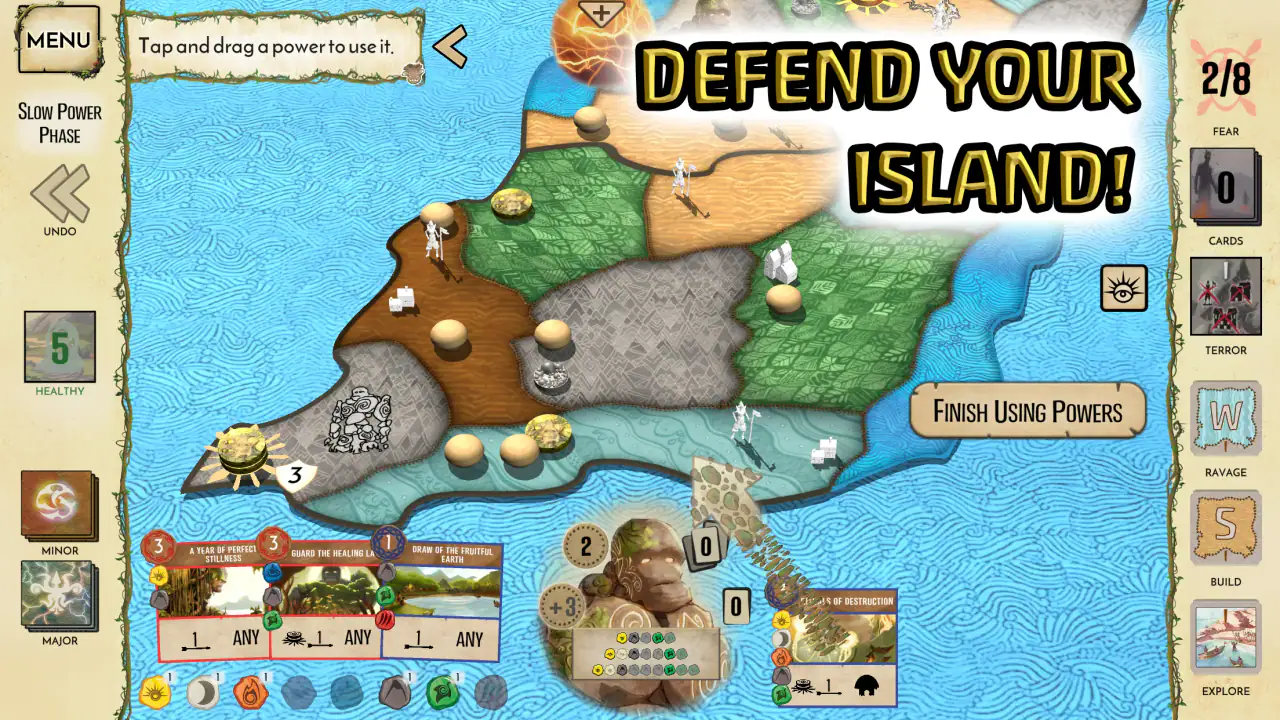
I begin by looking for the board’s most fragile areas rather than immediately chasing victory conditions. A location with several sources of pressure may deserve attention even if it is not currently the worst-looking space. I also consider whether an action solves a problem permanently or merely postpones it. This distinction is one of the most useful lessons I have taken from the game.
Another reliable habit is to think one phase ahead. I ask myself what the next likely threat will be and whether my current move leaves the right tools available to handle it. This does not mean predicting everything perfectly. It means avoiding a turn where every useful option has already been spent and the board is allowed to deteriorate without resistance.
I also pay attention to positioning. A power can look weak in isolation but become valuable when it affects the right region or creates room for another spirit to act efficiently. Conversely, a strong effect may be wasteful if it is used in an area that is easy to stabilize. The practical lesson is simple: I judge cards by the board situation, not by their apparent strength alone.
Settings and habits that make the experience easier
Before starting a serious session, I recommend checking the available settings rather than accepting every default automatically. The most useful adjustments are the ones that make the board easier to read and reduce avoidable interface friction. On a small phone screen, clear visual feedback matters because a missed icon or overlooked region can change the decision entirely.
I also take a moment to learn how the app presents information before playing at full difficulty. Digital board games often save time by handling rules and bookkeeping, but that only helps if I understand where the relevant information appears. I look at the available controls, inspect card details carefully, and make sure I know how to review the current state before confirming an important action.
That last point is especially important for beginners. I do not rush through prompts simply because the game offers a convenient button. I use the interface as a checklist: which powers are available, what has already changed, and whether the action is happening in the order I intended. A few cautious seconds early in a session can prevent a long chain of mistakes later.
The free entry point is useful for trying the core experience and deciding whether this style of strategy suits you. The app includes in-app purchases ranging from $2.99 to $24.99 per item, so I would approach the purchase screen deliberately rather than treating every additional option as necessary. If I enjoy the base experience, I can decide whether expanding it is worthwhile; if the fundamental pace already feels too demanding, spending more will not solve that problem.
Because the game is rated for Everyone, families may reasonably be curious about it, but the age label does not mean the rules are simple. I would describe the content as approachable in theme while the strategy itself is advanced. A younger player who already enjoys complex board games may have fun, especially with guidance, but a child expecting a straightforward casual game may find the planning heavy.
Small interface routines I keep using
I try to review the whole board before opening detailed card information. That order keeps me focused on the actual problem instead of getting distracted by an appealing ability. Once I know what I need to accomplish, I inspect the relevant options and compare them with the likely consequences.
I also avoid tapping through a turn on autopilot. In a game with several interacting effects, speed can become a liability. My faster sessions are not the ones where I rush every decision; they are the ones where I follow the same review order each time. Board first, immediate danger second, available tools third, and only then the final action. That repeatable pattern reduces hesitation without sacrificing judgment.
When I make a mistake, I treat it as information rather than immediately restarting. Sometimes the position is still recoverable, and continuing teaches me more about how the spirits and board interact. Restarting has its place, especially when I misunderstood a rule or made an accidental input, but restarting every time the plan becomes uncomfortable can hide the game’s most valuable lessons.
Faster patterns for experienced play
Once I understand the basic flow, I look for repeatable patterns instead of trying to invent a perfect solution every turn. The first is prevention. If I can stop a problem before it grows, I usually gain more freedom than I would by cleaning up the same problem after it becomes severe. This encourages me to value modest defensive actions and smart positioning, not just dramatic attacks.
The second pattern is coordination. When using more than one spirit, I avoid treating each spirit as a separate player with an independent score. I ask what one spirit can prepare for another. A move that seems inefficient on its own may be excellent if it makes the next spirit’s power much more valuable. This is one of the clearest differences between competent play and simply selecting the strongest-looking card.
The third pattern is preserving flexibility. I do not spend every resource just because it is available. Keeping an option open can be more important than gaining a small immediate advantage, particularly when the board contains several possible threats. This approach also makes the game feel less chaotic because I retain at least one response when the situation changes.
For faster sessions, I choose a familiar spirit and follow a known opening plan while remaining willing to adapt. I do not recommend memorizing a rigid sequence. Spirit Island is too dependent on the board state for that to work consistently. Instead, I remember priorities: protect the areas that could spiral, establish the spirit’s preferred kind of control, and avoid wasting powerful effects on problems that another action can solve more cheaply.
One non-obvious trade-off is that spreading help too widely can be worse than concentrating on a smaller part of the island. I sometimes want every region to look tidy, but dividing attention can leave each location only partly protected. A focused plan may make one area look worse temporarily while creating a stronger position overall. That is uncomfortable, yet often strategically sound.
Another useful insight is to distinguish between a visible setback and a losing trajectory. A damaged region is not automatically a disaster if I have a credible way to stabilize it. Conversely, a clean-looking board can still be dangerous if my next few turns lack the tools needed to respond. I judge the direction of the game, not just its current snapshot.
Where the app helps and where it slows me down
The digital format is most valuable when it handles the repetitive parts of a board game and lets me concentrate on decisions. I do not need to manage physical pieces or manually maintain every element of the island. That makes it easier to play alone and lowers the setup barrier compared with bringing a large tabletop game to the table.
At the same time, the phone format can make a complicated board harder to absorb. On a larger physical table, I can scan the whole island at once. On a phone, I may need to inspect areas more carefully, and that can interrupt the flow of planning. I find the experience more comfortable when I give myself time to review the screen rather than trying to play at the speed of a simpler mobile title.
This is also why I would choose the app over a casual digital board game only when I specifically want depth. If my priority is a quick, social game that friends can understand immediately, a lighter alternative is likely better. Spirit Island is the stronger choice when I want a cooperative puzzle with meaningful consequences and enough complexity to reward repeated sessions.
Advanced limits and who should skip it
The biggest limitation is not a missing feature but the amount of attention the game expects. New players can feel overwhelmed by the number of things competing for attention: the island, the invaders, spirit powers, timing, and the consequences of leaving one problem untouched. The app may present the rules digitally, but it cannot remove the need to learn a demanding strategy system.
I would also hesitate to recommend it to someone who dislikes losing because of a decision made several turns earlier. Spirit Island often asks me to live with the consequences of imperfect planning. That is satisfying when I want a puzzle, but it can feel punishing when I am looking for a relaxed experience with frequent rewards.
Controlling several spirits is another advanced limit. It gives solo players a richer way to explore combinations, but it increases the amount of information I must hold in mind. I only add complexity after I can comfortably manage one spirit. Otherwise, the session becomes less about learning the game and more about trying not to forget an available option.
The app is also not the best substitute for a physical group around a table. A digital version makes solo play convenient, but it cannot fully reproduce the conversation, shared discovery, and natural teaching that happen when friends play together in person. If the social ritual is the main reason I enjoy board games, I would choose a tabletop session whenever possible and use this version for practice or independent play.
Players considering purchases should be equally deliberate. The free version gives me a chance to test whether the core style works for me, while the optional items add a financial decision to the experience. I would not buy anything simply because I felt stuck. Difficulty is part of the design, and additional content is most worthwhile after I already know that I enjoy returning to the game.
There is also a learning curve in understanding why a move failed. The app can show the result, but I still have to analyze the chain of decisions that led there. I find that rewarding, although players wanting immediate explanations for every setback may prefer a more guided strategy game.
My verdict after learning its rhythm
Spirit Island is a strong recommendation for players who want a deep cooperative board game on a mobile device and are willing to learn through careful repetition. Handelabra Games has brought a demanding style of tabletop strategy into a format that is easier to start alone, and the result works best when I treat each session as a planning exercise rather than a quick distraction.
I especially value the way the game rewards habits: scanning the board before acting, preserving flexible options, coordinating spirits, and solving problems before they become emergencies. Those habits make me faster without making the game shallow. They also give repeated sessions a clear purpose, because I am not merely trying to win; I am improving how I read the island.
My recommendation comes with a clear condition: do not choose this if you want a simple, instantly understood board game. The 3.8 average reflects a product that can be rewarding but demanding, and the small-screen format does not remove that complexity. I would choose a lighter alternative for short breaks, casual groups, or players who prefer luck and quick turns to long-term planning.
For me, though, the free starting point makes the decision easy. I can try the central experience, learn one spirit, and see whether the deliberate pace feels satisfying. If it does, the optional purchases can be considered later. The real strength of Spirit Island is not speed; it is the feeling that a careful decision, made several turns early, can change the entire island.
That is why I would recommend Spirit Island to a friend who already enjoys complex board games, cooperative problem-solving, and sessions that reward patience. I would tell a casual player to approach it carefully, perhaps with guidance and plenty of time. Once its rhythm clicks, it becomes a distinctive strategy game rather than just another board-game adaptation.
FAQs for Spirit Island
What is Spirit Island?
Spirit Island is a cooperative strategy board game adaptation for Android and iOS in which players take the roles of powerful nature spirits defending their island from invading colonists. Each spirit has unique abilities, cards, and play styles. The game focuses on planning, resource management, cooperation, and reacting to an increasingly dangerous invasion rather than simply defeating enemies through combat.
Can Spirit Island be played offline?
Yes, Spirit Island is designed to support offline play, which makes it suitable for traveling or playing without a reliable internet connection. You can generally enjoy solo matches and local gameplay after installing the necessary content. However, online-related features, updates, account services, or multiplayer options may require an internet connection, so availability can depend on the version and platform.
Is Spirit Island suitable for beginners?
Spirit Island offers a helpful tutorial and guided explanations, but it is still a complex strategy game with many rules, card effects, and interacting systems. Beginners may need several games to understand spirit powers, invader actions, fear, blight, and long-term planning. Players who enjoy challenging board games should find the learning process rewarding, while casual users may initially feel overwhelmed.
Does Spirit Island support solo and multiplayer gameplay?
The app supports solo play, allowing you to control one or more spirits and experience the full cooperative strategy system on your own. It also includes multiplayer options, depending on the platform and current version, so you can coordinate with other players. Because each spirit has different strengths and responsibilities, communication and careful planning are especially important in group games.
Does Spirit Island include expansions or additional content?
The base app provides a substantial selection of spirits, powers, scenarios, adversaries, and difficulty settings, offering considerable replay value before you need anything extra. Some versions may offer expansions or downloadable content separately, adding new spirits, boards, mechanics, and challenges. Before downloading or making purchases, check the store listing to confirm which content is included in your specific version.
Pros
- Deep cooperative strategy with meaningful decisions every turn.
- Highly asymmetric spirits make each playthrough feel distinct.
- Excellent replayability through adversaries
- scenarios
- and difficulty levels.
- Strong solo mode that works especially well with multiple spirits.
- Digital version streamlines setup and handles complex game rules.
Cons
- Steep learning curve can overwhelm players unfamiliar with strategy games.
- Long sessions may feel demanding on mobile devices.
- Many effects and rules require careful reading and attention.
- Higher difficulty can become frustrating without effective teamwork.
- Visual presentation may feel less polished than the underlying board game.


